Home Renovations and Insurance: Guidance for Protecting Your Property
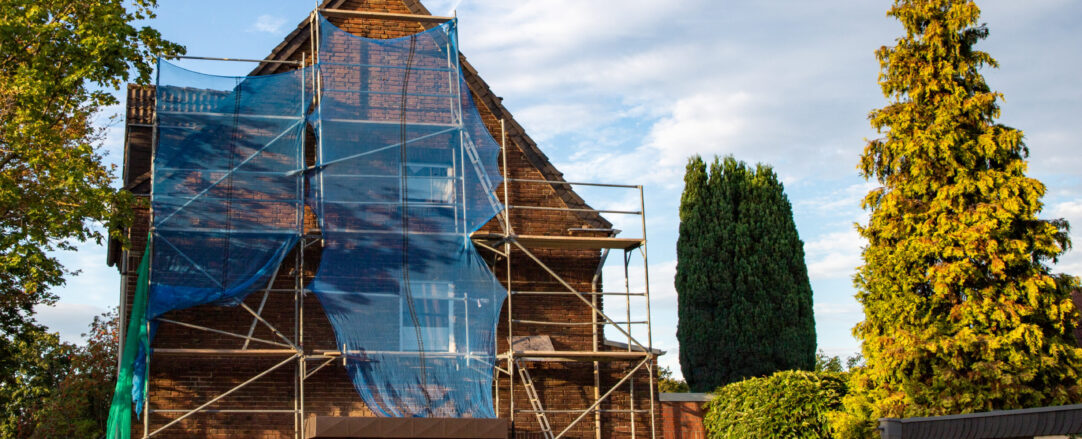
As spring arrives, bringing with it longer and lighter days, many homeowners may begin building works after months of planning. With ongoing uncertainty around mortgage rates, an increasing number of people are choosing to improve rather than move, investing in extensions, conversions, and transformative renovation projects.
While small updates — such as painting or redecorating — typically require no notification to your insurer, larger structural or architectural works can be a different story. Projects such as extensions, basement digs, loft conversions, or significant internal reconfigurations often call for a specialist renovation insurance policy to help protect both the existing property and the new works.
Why Renovation Insurance Matters
Standard home insurance is typically not designed to accommodate the risks introduced during building works. Many policies often restrict cover once construction begins unless your insurer has been notified and has agreed to continue providing protection. Even then, there are often limitations.
Home insurance usually cannot:
- Cover the works themselves
- Address accidental damage caused by the builder
- Meet the contractual insurance requirements set out in your agreement with the contractor
In practice, this means that if something goes wrong during the renovation, you may be relying on the builder’s liability cover — and only if negligence can be proven. Establishing fault can be complex and time consuming, and in some situations, there may be no negligence at all.
A Real Example: When the Unexpected Happens
Recently, a homeowner was carrying out renovation works on the lower floor of their property. During the process, moisture generated by the works travelled throughout the house, causing the luxury wallpaper in the upstairs rooms — which were untouched by the project — to peel away from the walls.
There was no negligence on the part of the builder; it was simply an unintended side effect of the renovation. Because of this, the builder’s insurance would not have responded. Fortunately, the homeowner had arranged a specialist renovation policy that extended cover to the existing structure.
This meant a claim could be submitted for the reinstatement of the room including damaged wallpaper — valued at £1,000 per roll — resulting in a claim of £55,000. Without the correct insurance in place, the entire cost may have fallen on the homeowner.
The scope of cover varies between policies and may include exclusions, we will provide clear explanations of any that apply.
Planning a Project? A Conversation Worth Having
Whether you are undertaking a modest refurbishment or a large scale architectural transformation, reviewing your insurance early in the planning stage can help prevent unexpected complications later.
If you are considering renovation or building works of any kind, the Brown & Brown Private Client team can offer guidance on whether a specialist renovation policy may be beneficial for your project and circumstances.
Click here to learn more about specialist cover for renovations and building works