Thought Leadership
Julie Turpin's Latest Newsletter - Resilience Is Best Practiced, Not Forced.

Change is inevitable. But rather than waiting for change to happen to you, what if you invited it in — like a practice?
Think of it like yoga. You don’t get flexible by avoiding the stretch; you build the muscle by showing up, even when it’s uncomfortable. Resilience works the same. It’s not something you can summon in a crisis — it’s something you must strengthen over time.
If you wait for change to find you, it will — but you won’t have the moves to adapt to it. Most of us try to control life by keeping things steady. We equate comfort with safety and sameness with security. But when we resist change, we don’t prevent it. We just postpone it until life forces it on us in bigger, harder ways.
What if we flipped that mindset? What if we treated change not as something to survive, but as something to practice? Small, intentional stretches — taking a new approach, challenging an old belief, trying something before you’re ready — are what build the strength to bend instead of break when the stakes are higher.
When you invite change on your own terms, you get to set the pace. You build confidence in your ability to handle uncertainty, one choice at a time. And that practice becomes its own kind of power: the quiet assurance that whatever comes next, you’ll know how to move with it instead of against it.
How to Build Resilience from the Inside Out
Resilience isn’t about being tough or unshakable. It’s the ability to recover your balance when life throws you a fastball. It’s less about enduring chaos and more about adapting with intention.
And that word — intention — is the key. You don’t stumble into resilience. You build it by paying attention to how you respond, what you repeat, and what you choose to release. Every small act of awareness strengthens your capacity to handle the bigger shifts.
Here are a few ways to start strengthening that resilience muscle:
1. Master your mind. Most of our thoughts run on autopilot. Start by noticing your thought patterns. What story are you telling yourself about what’s happening? The goal isn’t to silence the noise, but to steer it in a more productive direction. When you catch a loop of doubt or self-criticism, reframe it: I can learn from this. I’ve handled hard things before. When you manage your mind, you make space for gratitude, perspective and growth.
2. Make self-care a strategy. Resilience doesn’t come from pushing harder; it comes from showing up with a clear mind and steady energy. Create habits that restore you: sleep, exercise, boundaries or whatever helps you reset. For me, meditation has been a powerful tool. It clears the clutter and creates space for intuition to surface. Self-care isn’t indulgence; it’s the daily maintenance that keeps you grounded enough to handle the next stretch.
3. Have a mantra. A mantra is like a mental anchor or phrase that pulls you back when things get hard. It can be simple: I can do hard things. Change is how I grow. I’m built for this. Repeat it until it becomes your default thought in moments of stress. Over time, it reshapes your mindset from reactive to ready.
4. Test yourself. Invite small doses of change into your life on purpose. Take a different route to work. Try something new before you feel ready. Open the door with your non-dominant hand. These may sound trivial, but they’re small stretches that teach your brain to adapt. Then, when the big shifts come — a career move, a loss, a surprise opportunity — you’ve already built the reflex to lean in instead of resist.
5. Build your resilience circle. Resilience may start within, but it gains momentum in community. Surround yourself with people who normalize imperfection, create a sense of psychological safety and remind you of your strengths when you forget them.
From Inner Work to Collective Strength
Once you’ve built resilience within yourself — practiced it and strengthened it — you can model it for others. That’s where personal growth becomes leadership.
At Brown & Brown, we’re in a season of tremendous evolution, welcoming thousands of new teammates into our culture. Someone recently asked me if I think our culture will change. My answer: “Of course, it will — and that’s not something to fear.” Growth always brings new perspectives, new energy and new ways of working together.
When you’ve done your own inner work, you can lead others through those shifts with empathy and steadiness. You recognize that resilience isn’t about pushing through change, but guiding people through it, helping them find their footing, their confidence and eventually their own resilience practice.
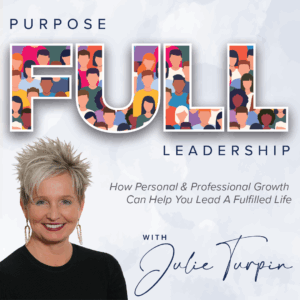
PurposeFULL Leadership
by Julie Turpin, Chief People Officer
Subscribe to Julie’s PurposeFULL Leadership newsletter on LinkedIn and see her latest articles here.